
From Server Rooms to the Cloud
Not very long ago, running a business website or software application required expensive hardware. Companies often had dedicated server rooms filled with computers, networking equipment, cooling systems, and backup power supplies. Even small businesses had to invest heavily in technology infrastructure before they could grow online.
Imagine a growing company in the early 2000s. As customer numbers increased, the company would need to purchase more servers, install them physically, hire technical staff to maintain them, and ensure that everything worked properly. If traffic suddenly doubled, the business might struggle because its servers could not handle the additional demand.
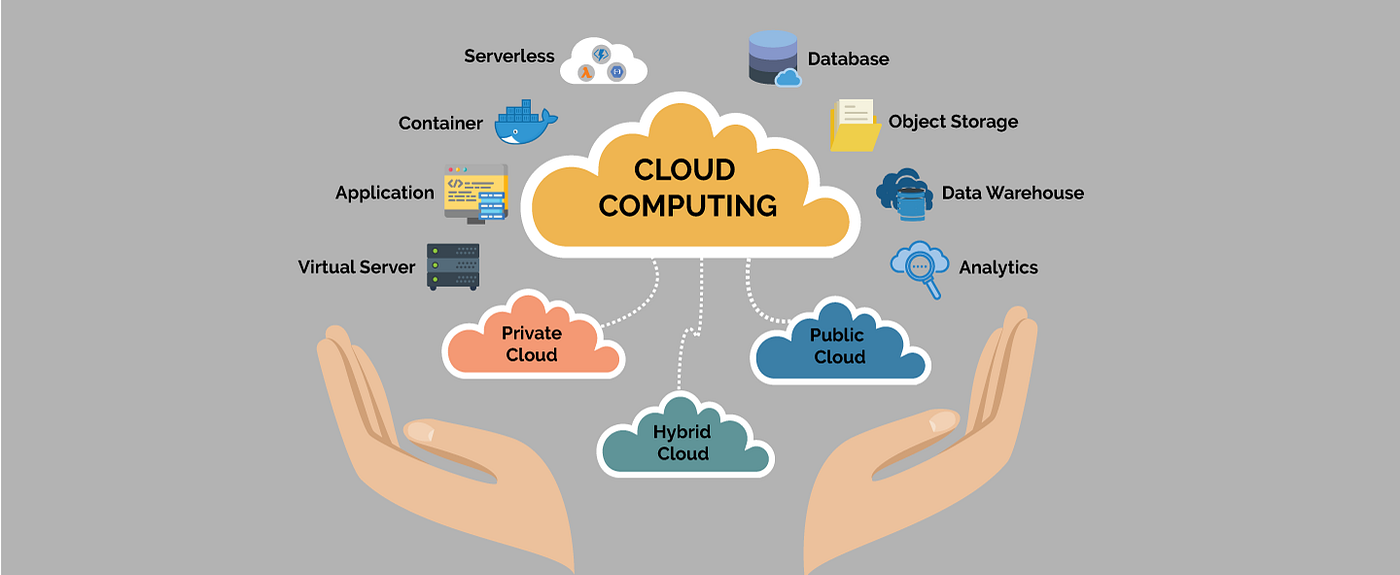
Things began to change when cloud computing became widely available. Instead of buying and maintaining physical servers, businesses could rent computing resources from large cloud providers. These providers operated massive data centers around the world and allowed companies to use computing power whenever they needed it.
Think of cloud computing like electricity. Most people do not build power plants to generate electricity for their homes. They simply use electricity from the grid and pay for what they consume. Cloud computing works in a similar way. Businesses access computing resources over the internet and pay only for what they use.
Today, many of the websites, applications, and online services people use every day rely on cloud technology. From streaming movies and shopping online to video conferencing and social media, cloud computing quietly powers much of the digital world.
For business owners, this shift has been transformative. They no longer need large upfront investments in hardware. Instead, they can focus on serving customers and growing their business while cloud providers handle much of the technical infrastructure.
How Cloud Computing Supports Daily Business Operations
To understand why businesses depend on cloud computing, it helps to look at a typical workday in a modern company.
A team member starts the morning by checking emails stored in a cloud-based system. Another employee opens a customer relationship management platform to review sales opportunities. The marketing team accesses shared documents online. Developers work on software projects hosted in cloud environments. Managers participate in video meetings with colleagues located in different countries.
Most of these activities happen through cloud services.
One of the biggest advantages is accessibility. Employees can work from almost anywhere with an internet connection. Whether they are in an office, at home, traveling, or meeting clients, they can access the same files and applications.
This flexibility became especially important as remote and hybrid work models grew around the world. Companies discovered that cloud-based tools allowed teams to collaborate effectively regardless of physical location.
Cloud computing also improves teamwork. In the past, employees often exchanged documents through email attachments. Multiple versions of the same file could create confusion. Today, cloud-based collaboration tools allow multiple people to work on the same document simultaneously.
For example, a sales manager in London, a designer in Singapore, and a marketing specialist in Toronto can collaborate on a project in real time. Changes appear instantly for everyone involved.
Another major benefit is automatic updates. Traditional software often required manual installation and maintenance. Businesses had to schedule updates and ensure compatibility across systems. Cloud applications typically update automatically, giving users access to new features and security improvements without extra effort.
Data storage has become much simpler as well. Businesses generate enormous amounts of information every day, including customer records, financial data, documents, images, and videos. Cloud storage allows companies to keep this information securely without purchasing additional hardware whenever storage needs increase.
As organizations continue to generate more data, cloud platforms make it easier to manage, organize, and access information efficiently.
Scalability, Cost Savings, and Business Growth
One of the strongest reasons businesses depend on cloud computing is its ability to grow alongside the company.
Consider an online store preparing for a major holiday shopping season. During normal months, website traffic may remain steady. However, during special promotions or holiday sales, visitor numbers can increase dramatically.
With traditional infrastructure, the business would need to purchase enough hardware to handle peak demand, even if that extra capacity remained unused most of the year. This approach could be expensive and inefficient.
Cloud computing solves this problem through scalability. Businesses can increase computing resources when demand rises and reduce them when traffic returns to normal levels. This flexibility helps companies manage costs more effectively.
Startups especially benefit from this model. A new business can launch with minimal infrastructure costs and expand resources gradually as customer numbers grow. Instead of making large technology investments upfront, entrepreneurs can focus on product development and customer acquisition.
Cost savings extend beyond hardware purchases. Maintaining physical servers requires electricity, cooling systems, security measures, technical expertise, and ongoing maintenance. Cloud providers spread these costs across millions of customers, making advanced technology more affordable for organizations of all sizes.
Disaster recovery is another important advantage. Unexpected events such as hardware failures, power outages, cyberattacks, or natural disasters can disrupt business operations. Cloud platforms typically store data across multiple locations, reducing the risk of permanent data loss.
Imagine a company whose office experiences a major electrical problem. If critical systems are hosted entirely on local servers, operations could stop immediately. If those systems are hosted in the cloud, employees may still be able to access data and continue working from another location.
Business continuity has become increasingly important in a world where customers expect services to remain available at all times. Cloud infrastructure helps companies maintain reliability and minimize downtime.
Large enterprises and small businesses alike appreciate the ability to adapt quickly to changing market conditions. Whether launching a new product, entering a new country, or handling sudden growth, cloud computing provides the flexibility needed to respond efficiently.
Why the Future of Business Is Closely Connected to the Cloud
As technology continues to evolve, cloud computing has become more than just a way to store files or host websites. It now serves as the foundation for many of the innovations shaping modern business.
Artificial intelligence applications often rely on cloud infrastructure because they require significant computing power. Businesses use cloud-based AI tools to analyze customer behavior, automate repetitive tasks, improve customer support, and generate business insights.
Data analytics platforms also depend heavily on cloud resources. Companies collect information from websites, mobile applications, sales systems, and customer interactions. Cloud computing allows them to process large amounts of data quickly and identify trends that support better decision-making.
Cybersecurity has become another area where cloud providers play a critical role. While no system is completely immune to threats, major cloud providers invest heavily in security technologies, monitoring systems, and specialized expertise. Many small and medium-sized businesses gain access to security capabilities that would otherwise be difficult or expensive to implement independently.
Global expansion has become easier because of cloud infrastructure. A company based in one country can serve customers across multiple regions without building data centers around the world. Cloud providers maintain facilities in numerous locations, helping businesses deliver faster and more reliable services to international audiences.
Innovation also happens more quickly in cloud environments. Developers can test ideas, build prototypes, and launch new applications without waiting for hardware purchases or lengthy infrastructure setup processes. This speed helps companies remain competitive in rapidly changing markets.
Many organizations now view cloud computing as a strategic business tool rather than simply a technology solution. It enables agility, supports growth, improves collaboration, and reduces operational complexity.
When people order products online, stream videos, join virtual meetings, access banking services, or use business software, cloud technology is often working behind the scenes. Although most users never see the infrastructure directly, it plays a vital role in keeping digital services available and efficient.
For modern businesses, cloud computing has become as essential as reliable electricity, internet connectivity, and communication systems. It allows companies to operate more efficiently, adapt to change more quickly, and serve customers more effectively. As digital transformation continues across industries, the importance of cloud computing is likely to grow even further, making it one of the most influential technologies in the modern business world.